
Inside SRC
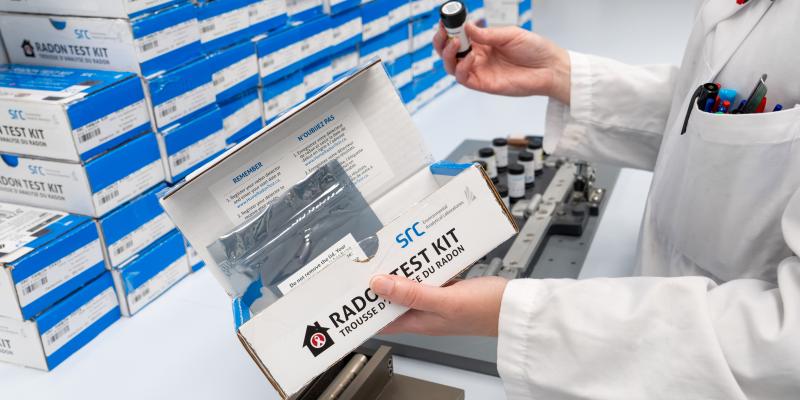
Radon is a colourless, odourless gas that can seep into homes from cracks in the foundation and linger in living spaces. For more than fifteen years, SRC and Lung Sask have collaborated on radon testing. In this post, experts answer common questions about radon.
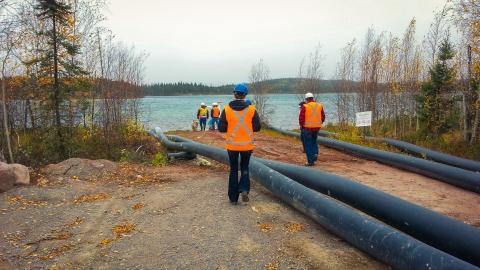
Meaningful engagement with Indigenous communities impacted by a remediation project throughout all of its stages is integral to success. Learn how SRC engaged communities in the Lorado Mill Site remediation.
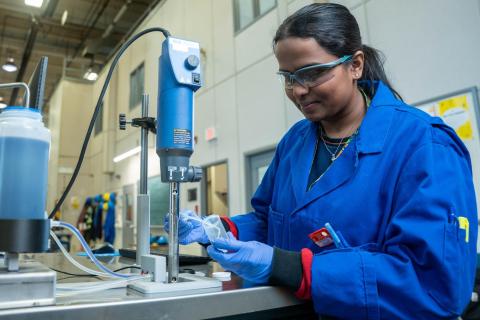
SRC has grown from a small research organization into Canada’s second largest research and technology organization, supporting Saskatchewan industries and clients worldwide.
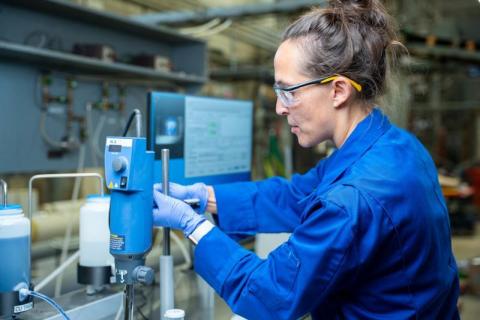
Whether in potash slimes, oil sands or in kimberlite slurries, active clay minerals can cause serious issues in many plant operations. For industries where clay minerals are present, a better analytical approach is needed to more quickly and accurately measure these minerals.

Piloting is a process of testing a technology, process or system on a specific scale that can simulate conditions in industrial environments, either as a trial run or proof of concept. Learn more about the importance of piloting, when is the right time to pilot and how SRC can help.

National Indigenous Peoples Day (NIPD) is an opportunity to celebrate the cultures, histories and contributions of First Nations, Inuit and Métis Peoples across Canada. Learn more about SRC’s reconciliation journey.

The 2025 field season kept SRC’s Project CLEANS team busy with engaging meetings with Indigenous and non-Indigenous communities, ongoing remediation efforts and the continued monitoring of recovering ecosystems across these sites in the Athabasca Basin.

Preconcentration offers a proven way to remove waste early, lowering energy use, water demand and processing costs in later stages. Learn more about the importance of selecting the most effective technologies.

The Solvent Extraction Unit building in SRC's Rare Earth Processing Facility houses more than 400 custom-made SX cells, which were built into modular units known as “batteries” and arranged into banks and designed and built in-house at SRC.

Indicator mineral analysis has long been a key tool in supporting exploration decision-making, but these changing pressures highlight the need for not just faster analysis, but a different way of working with mineralogical data. Within the broader exploration toolkit, indicator mineral analysis complements methods such as geological mapping, geophysical surveys, drilling and core logging, and bulk geochemical analysis.

SRC was contracted by the provincial power utility, SaskPower, to design, construct, install and commission the province’s first-ever independent community power system of its kind for the small, remote community of Descharme Lake, Saskatchewan.
