
Key Points
- SRC’s Mineral Processing team has developed processes and technologies for the mining industry over the last several decades, creating a foundation of internationally recognized work across a wide range of minerals.
- Every deposit requires a process or solution customized to its unique physical and chemical characteristics.
- SRC can simulate mine site conditions and move projects from laboratory testing through process development and pilot-scale demonstration, helping clients validate solutions and reduce scale-up risk.
Companies face a variety of challenges at different stages of the mining production cycle, some more complex than others. It's in these tough-to-solve areas that SRC has carved out a niche offering of research, development and demonstration services and built world-class labs and facilities to support projects and clients around the world.
Its Mineral Processing team is one example of this, and if you've worked with them, you understand how critical the right experts in the right place are to solving those complex challenges. From exploration to extraction and milling to tailings, SRC’s Mineral Processing team supports mining clients across the cycle to successfully deploy processes and technologies that meet their objectives, both economic and environmental.
“We are not only a lab that tests things, we are a team that helps the client solve the problem and find the solution,” said Baodong Zhao, Director of Mineral Processing at SRC. “If it’s a challenge? That’s the best part of my job. Niche, complex and novel are what drives our Mineral Processing team.”
Luckily for them, some of the most complex problems are unearthed by the global mining industry.
Whether it’s mineral processing, metallurgical testing or tailings management, technical services across the mining cycle remain in high demand, according to Jack Zhang, Senior Director of Strategic Technologies at SRC.
“The mining industry needs this kind of testing to support its operations,” Zhang said. “They cannot always test in the plant or facility directly; they need to test in a controlled but industrial environment to uncover the problems and then work towards a solution. That’s where SRC comes in.”
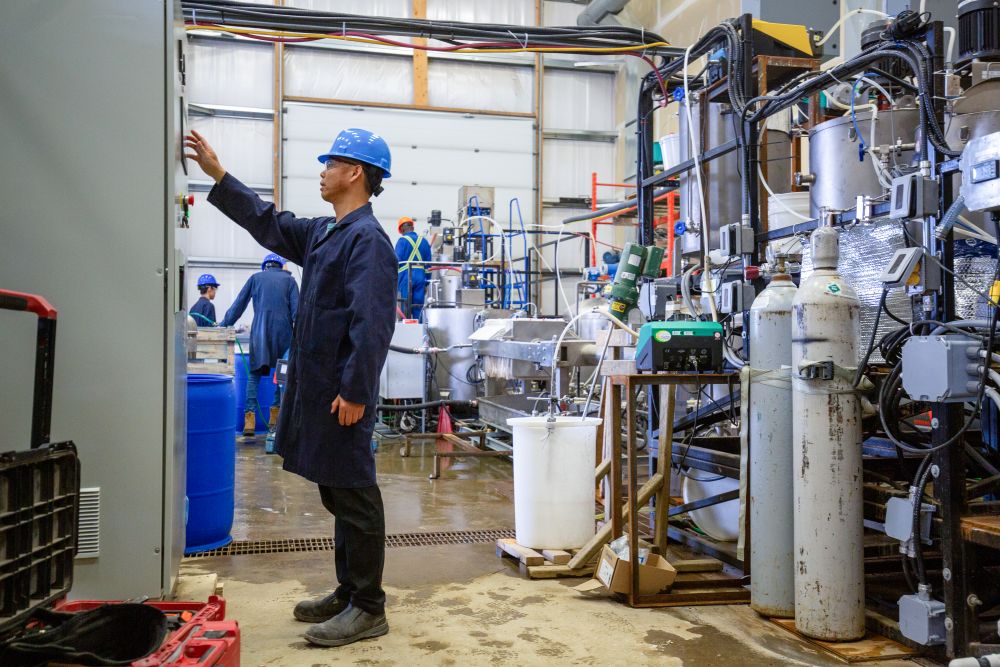
Mining companies across the world work with SRC to develop customized testing programs to meet the unique needs of their resources.
Rooted in Saskatchewan
Established in 1947, SRC has a long history of playing a key role in helping the mining industry unlock value from complex geologies.
Primarily focused on potash and uranium – Saskatchewan’s two most prevalent commodities – in the early days, SRC’s scientists and engineers spent decades working with industry to develop specialized testing and equipment to improve uranium and potash recovery. The resulting technology and expertise have created a foundation on which SRC's labs and facilities continue to operate and grow on.
While SRC’s work focused initially on Saskatchewan deposits, the specialized expertise was quickly discovered internationally. Zhang recalls one of his first potash clients was a mine in the Democratic Republic of Congo. Fast-forward to today, SRC has established an international reputation in the testing and process development of potash and uranium technologies.
“Whether the client, process or technical challenge is big or small, what clients are looking for is an entire solution, not just a partial one,” Zhang said. “Every client starts with rock and ore, and the Mineral Processing team helps them get to the final product they want – whether a concentrate, metal or salt.”
Each Deposit Is Its Own Puzzle
According to Zhang, what mining companies often find under the surface varies widely from one deposit to the next, even if the deposits are a few feet apart. This means no single solution can simply be applied from one deposit to the next.
For example, SRC has worked with every major uranium mining and exploration company operating in Canada – all located in the same region of northern Saskatchewan in the Athabasca Basin.
“Across all of these companies, the ore is very similar, but none of the deposits are exactly the same. Each operation requires SRC to develop a unique process in order to come to a solution,” Zhang said. “Because of those small differences, you cannot give one recipe to everyone.”
Since processing minerals isn’t a one-size-fits-all solution, the complexities of the work have meant that SRC often needs to innovate testing methods, equipment and processes.
Weathering Change
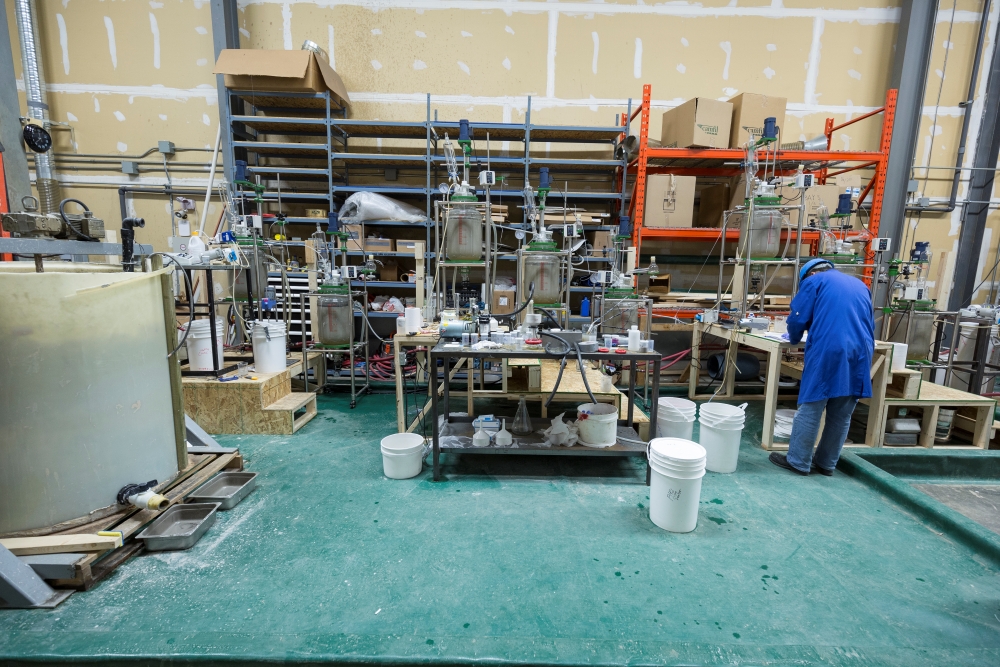
During the life of a mining operation, companies can face many changes, from minerals to climate. SRC has worked with industry to develop new processing technologies and strategies to address this variability, as well as diagnose and troubleshoot technologies and processes that may be performing differently than expected.
For example, after a processing plant starts operating, process equipment may, over time, begin to perform sub-optimally because the deposit minerals have changed and the process equipment is unable to handle this variability.
“In situations like this, clients will come to us looking for a solution and it’s often not very straightforward. There are no cookie-cutter solutions here,” Zhang said.
With state-of-the-art labs and facilities, SRC’s Mineral Processing team can simulate the issues experienced in a client’s processing facility in order to develop a solution based on supporting evidence.
An Integrated Approach
Mining clients seeking SRC’s expertise range from junior exploration companies, consulting companies, equipment manufacturers and technology providers all the way to international mining companies tackling the world’s largest mineral deposits.
The ability to work with just one organization to solve a variety of challenges across the mining cycle saves SRC's clients time and resources.
Zhang said the Mineral Processing team at SRC, with support from other labs and experts, helps with every step of the mining operation.
For example, SRC Geoanalytical Laboratories, an ISO/IEC 17025:2017-accredited facility, along with its Advanced Microanalysis Centre™ provide geochemistry results and an expanded range of services for mineralogical analysis. SRC’s Mineral Processing team can add value to the client by taking this one step further to develop and innovate extraction processes, while also drawing on the technology and experts of SRC's Minerals Liberation Sorting Centre.
The sorting team provides a unique set of preconcentration and ore sorting capabilities, such as dense media separation and sensor-based sorting. In addition, SRC’s Pipe Flow Technology Centre™ supports hydrotransport, mixing and tailings management testing.
On the environment side, SRC Environmental Analytical Laboratories provides clients with analytical services for testing water, soil, vegetation and biota and is one of only a few labs accredited for radioactive substances. SRC can also support an operation's remediation and climate resilience goals.
In Their Element
“While we started off focusing on potash and uranium, we have continuously been learning, adapting and innovating our technology to now, where we can process a wide spectrum of metals on the periodic table. Not all of them yet, but a lot of them,” Zhang said, adding the team has done work with roughly 40 elements on the periodic table.
From metal sulphides, oxides, silicates and carbonates, SRC has built a substantial breadth of metallurgical testing experience, developing processes for over 140 different minerals, which demonstrates its ongoing dedication and growth in mineral processing expertise.
“At the time the group started, we only had two employees and today we have twenty,” Zhao said. “Since then, in addition to uranium and potash, we have expertise in developing processes for rare earth elements, lithium, gold and copper and many other areas of development, including extracting alumina from black shale.”
One of the largest Mineral Processing projects undertaken by SRC over the past decade focused on a pilot project to prove out battery-grade lithium production.
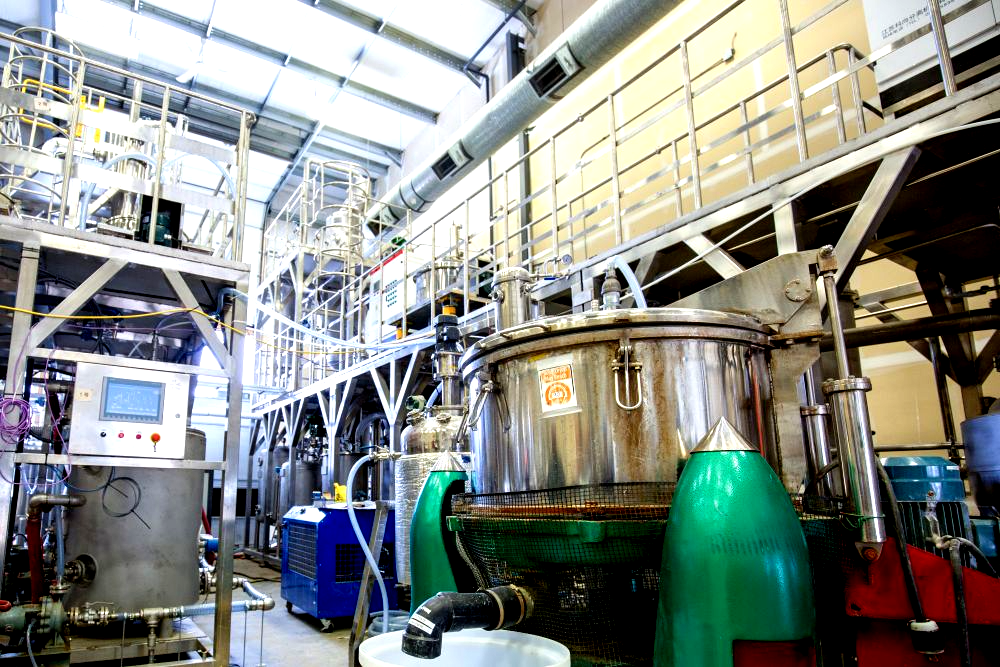
In 2023, Mineral Processing successfully executed the development of a continuous lithium pilot processing facility for a client, designed to process hard-rock lithium mineral concentrate at a rate of 30 to 70 kg/h into battery-grade lithium carbonate and lithium hydroxide monohydrate.
The team developed a flexible, continuous platform capable of both piloting a process and producing marketable and saleable product, significantly de-risking scale up.
More recently, SRC is also embarking on a pilot plant for graphite at a client’s request, Zhao added.
Big Ideas that Support Industry Growth
“We always do two things,” Zhang said. "We are always responsive to market demands, and secondly, even if there is no client at the moment, we will begin to develop our own technology and knowledge for processing different minerals.
Thinking ahead, naturally you will find a client,” Zhang said.
Rare earth element (REE) processing presented one such opportunity. As demand for rare earth metals grew alongside emerging technologies and the electrification of the economy, Zhang recognized the need to develop processing expertise outside of China.
SRC approached rare earths as it had other emerging minerals: by responding to client needs, building technical expertise and developing new processing technologies and capabilities.
In 2012, a client from the United States approached SRC seeking assistance in separating and concentrating (otherwise known as beneficiation) rare earth minerals that were rich in neodymium (Nd) and praseodymium (Pr) – two of the seventeen REEs and among the most important for electric vehicle technologies.
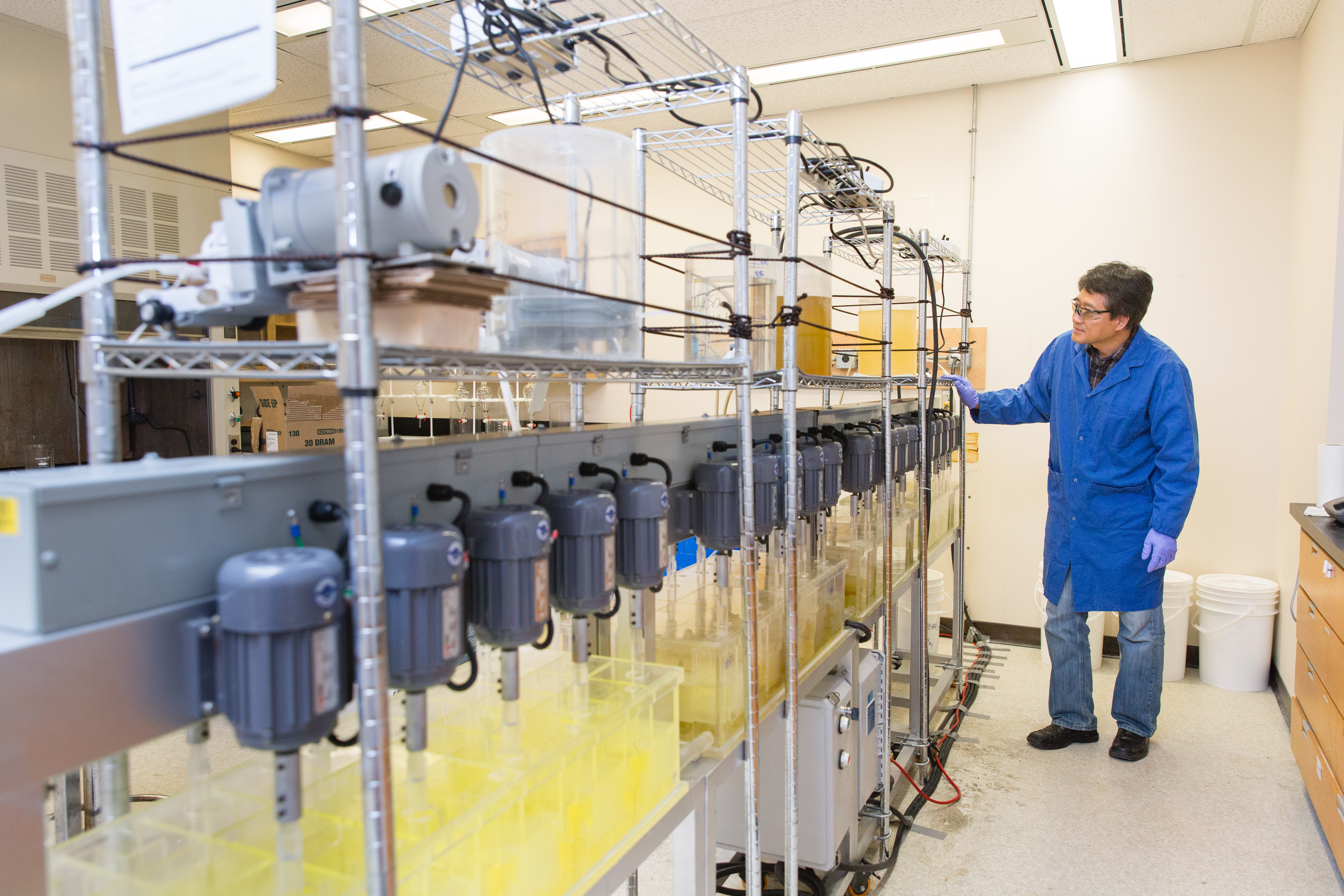
“This was the first REE project we did in the lab, and we quickly learned the path of how to optimally beneficiate the minerals, increasing the concentration of REEs tenfold,” Zhang said.
While a tenfold increase in concentration still did not make the project economical, Zhang said Mineral Processing worked with the client for several years and gained valuable expertise in the of processing allanite, monazite and bastnaesite, three common REE-bearing minerals.
“We needed to characterize the mineral, both the physical and chemical properties, and based on this information, come up with a range of processing solutions," Zhang said. "Given that mineral deposits are so diverse however, there’s never a one-size-fits-all solution.”
Fast-forward to 2020, based on this experience and knowledge of the market, SRC announced a transformational project: developing a first-of-its-kind Rare Earth Processing Facility in North America.
With approximately $187 million in funding from the Government of Saskatchewan, SRC’s processing facility has been developed based on the initial expertise of Zhang, Zhao and their team. Staged commissioning of the facility is underway, with initial commercial production anticipated in 2027.
In anticipation of the Rare Earth Processing Facility, Mineral Processing is also testing and developing technologies to process rare earth elements from bastnaesite concentrate sourced from a Canadian operation. The processed material from this pilot project will then be fed into SRC's Rare Earth Processing Facility’s operations.
Test, Validate, Demonstrate
From potash and uranium to rare earths and lithium, SRC's Mineral Processing team has built its expertise by starting with the mineral and working alongside clients to develop the solution that meets their operational needs.
Whether working independently or together with one of SRC's many other labs or facilities, what sets the team apart is its ability to simulate mine site conditions, test, validate and, if necessary, build a pilot-scale facility to prove out its solutions under industrial conditions.
With world-class labs, specialized expertise and the ability to demonstrate processes at pilot scale under industrial conditions, SRC helps de-risk the path from ore to final product, no matter what stage of the mining cycle a project is at.
