
Key Points
- The only way to know if your home has radon is to test for it.
- Every home should be tested because radon levels can vary significantly—even between neighbouring homes.
- Test for at least 91 days, ideally during fall or winter, in the lowest regularly occupied area of the home.
Radon is a colourless, odourless gas that can seep into homes from cracks in the foundation and linger in living spaces. As a byproduct from the breakdown of uranium, radon is considered a significant health risk and is the leading cause of lung cancer in non-smokers in Canada.
For more than fifteen years, SRC and Lung Sask—a leading advocate for radon awareness in the province and across Canada—have collaborated on radon testing, building off SRC’s expertise as one of Canada’s most complete analytical chemistry laboratories with unique capabilities in radiochemical analysis.
Jenna Smith-Windsor, Supervisor of Radiochemistry at SRC Environmental Analytical Laboratories, and Bethany Verma, the Health Promotion Manager at Lung Sask, provided answers to some of the most frequently asked questions around radon and radon testing.
What level of radon is considered hazardous to human health?
Bethany: There is no safe level of radon, meaning any level can be considered hazardous to your health. That said, Health Canada has set the guideline for radon in indoor air of 200 becquerels per meter cubed (Bq/m3), meaning that homes with a radon level over 200 Bq/m3 should take action to reduce their level.
How common is radon in Canadian homes? Are certain regions or provinces more at risk?
Bethany: Approximately one in five homes have high levels of radon, but certain areas of Canada can have higher levels. For example, Saskatchewan tends to have higher levels of radon because its soil is uranium rich. Houses next to each other or on the same block can have very different radon levels, so the only way to know your radon level is to test for it.
We developed a mapping tool to educate people about radon levels across Canada.
Why is this collaboration between SRC and Lung Sask important?
Bethany: There aren’t many accredited labs in Canada for radon testing, so it’s quite special to have one in Saskatchewan. The tech infrastructure between our two organizations creates a seamless process for people, from purchasing a test online to getting their results.
Jenna: Our collaboration brings together Lung Sask’s public education and outreach with SRC’s accredited testing expertise. Through our joint work with the Take Action on Radon SK Coalition, we help Saskatchewan residents better understand their radon risk, test their homes and take action to protect their health.
How many radon test kits were sold last year compared to previous years?
Bethany: In 2024, we had a big year with Health Canada’s Cross-Canada Survey of Radon Concentrations in Homes. It raised a lot of awareness about testing, and we sold roughly 3,700 tests. We’re close to that in 2026 already and we’re likely to exceed 2024 sales since our busiest testing season is in the fall.
How do people test their homes for radon?
Bethany: The easiest way to purchase a test through Lung Sask is online at homeradontest.ca. The test will ship right to you. The cost that you pay includes shipping the test and then sending it back to SRC’s lab.
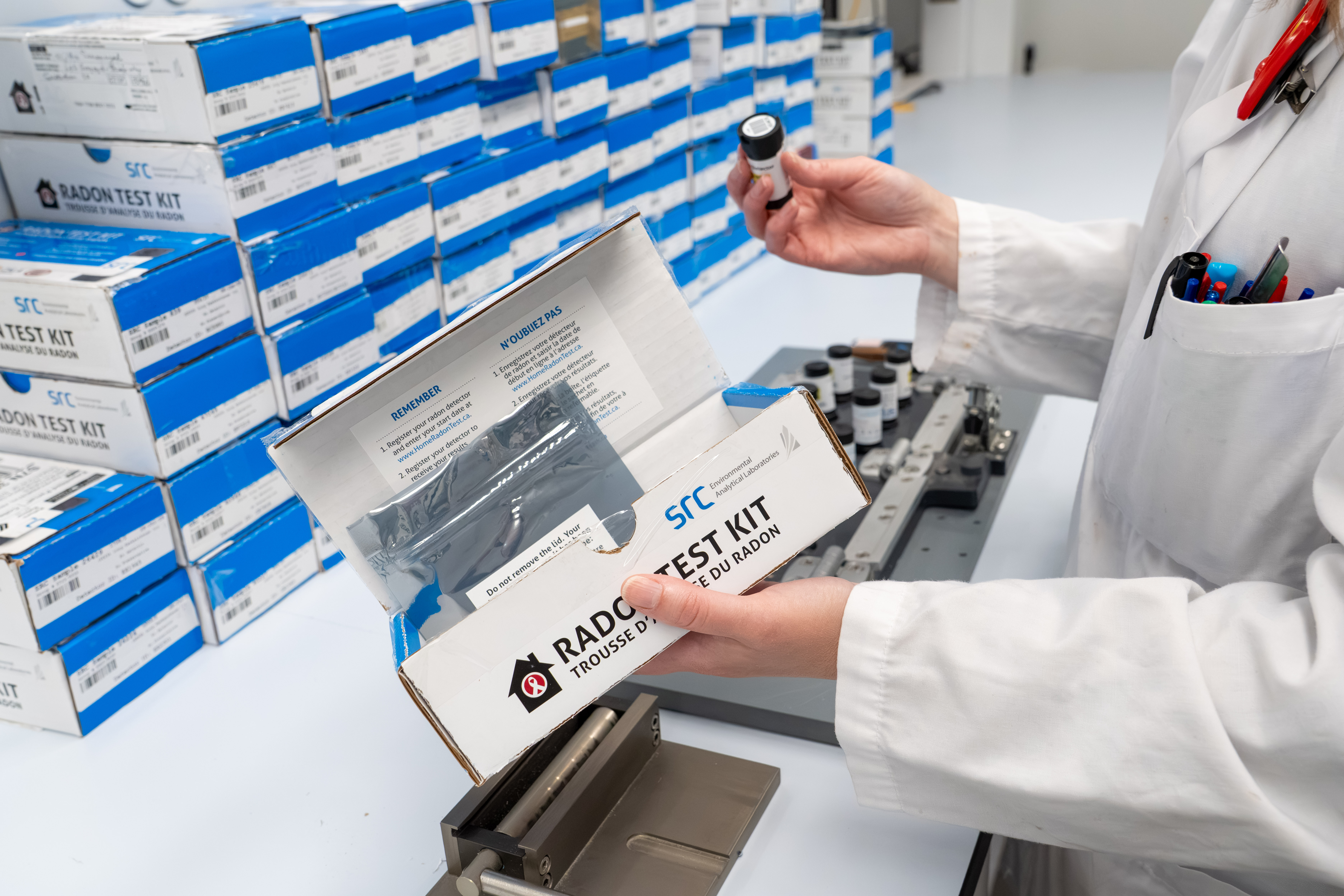
Jenna: SRC’s radon test kit includes a detector inside of a foil bag and it's activated as soon as the foil bag is opened. It’s recommended to place the detector in the lowest lived-in level of your house. If no one is living in your basement then you don’t necessarily need to test at that level, but if you have teenagers sleeping in the basement or have a playroom in the basement or a family room, then it's highly recommended to test there.
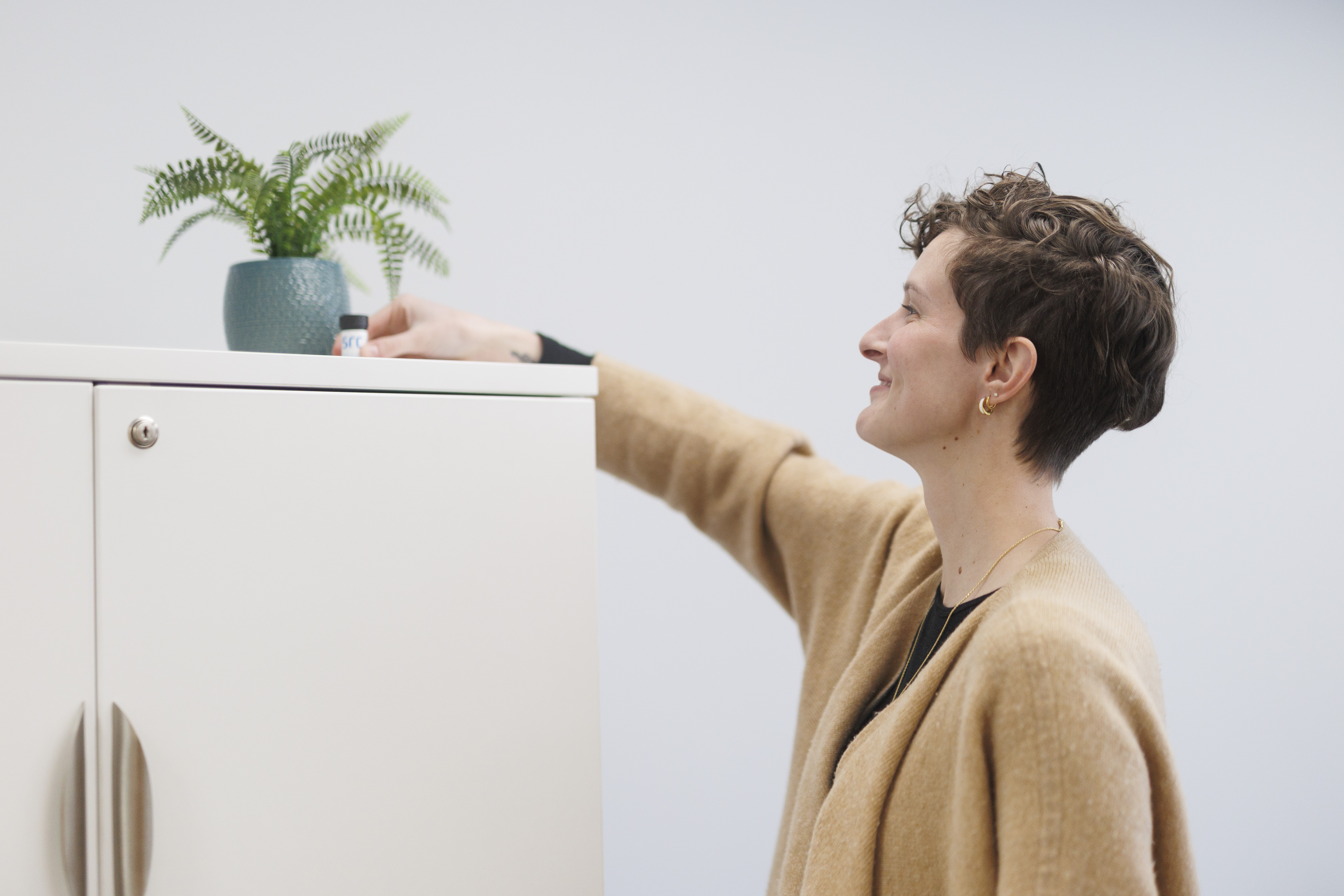
You also want to test close to breathing level, so anywhere from coffee table height up to six feet high. You don't want it close to a wall or close to your furnace. What I recommend to people is to put it on the coffee table next to your couch or on the nightstand next to your bed. Health Canada recommends testing for a minimum of 91 days. Once you’ve reached 91 days, you can ship the detector off to SRC for analysis.
Bethany: We also have automatic e-mail reminders to help people remember to send their tests back after 91 days. Once you get the test, you go to homeradontest.ca and enter your test start date and that starts the timer on your test.
Jenna: Fall and winter are the best times to test your home for radon because that’s usually when doors and windows are closed and it’s home heating season, meaning you’ll get a more conservative estimate of the annual radon level in your home.
What's inside of a radon test kit? How does the detector work and how is it analyzed at the lab?
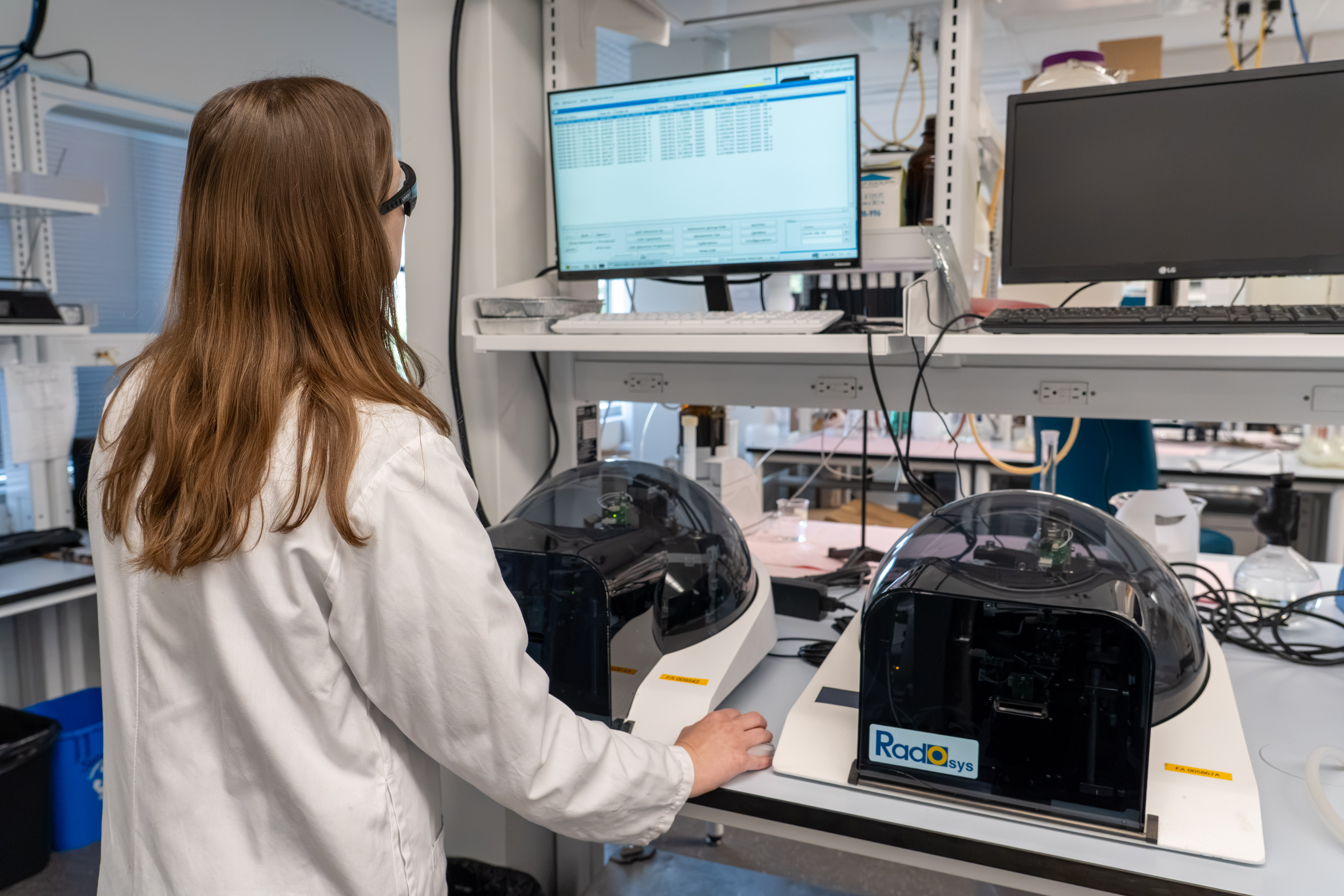
Jenna: Inside the kit is a detector which comes in a foil bag. The detector itself looks like a film canister. There are also instructions that explain how to set up and register your test. Then there is a second foil bag that you put the detector in once your test is complete and a return shipping label. At the lab, we take the detector out of the bag and remove the lid with special tools.
As air in your home passes through the radon detector, every alpha particle that radon emits makes a dot or an indent on a chip inside. At the lab, we take those chips out and we develop them like camera film. We make those dots more evident or cloudy on the film by exposing them with chemicals. And then from there, we count the dots with a calibrated microscope.
What does it mean to the average Canadian to work with a lab accredited by the Canadian Association for Laboratory Accreditation (CALA) and the Canadian National Radon Proficiency Program (C-NRPP)?
Jenna: Basically, it means people can have trust in the laboratory; that we are following specific procedures and that our analyses are accurate and reliable. You can trust the data we provide.
We are certified for radon testing through the C-NRPP, which includes our two employees that are certified radon measurement professionals. Our lab is also accredited with CALA for radon analysis.
What can homeowners do if levels are high?
Bethany: We always recommend working with C-NRPP certified mitigation professionals to reduce the radon levels in your home. The gold standard for reducing radon levels in a home typically is what's called active sub-slab depressurization, which is essentially installing a pipe and fan. If your home was built after a certain year, you'd already have that pipe roughed in and you just need to install a fan on it. The fan sucks radon out from underneath your home and exhausts it out before it can accumulate inside.

Can workplaces test for radon? What if I want to order a lot of radon tests?
Jenna: Definitely! Any workplace, school, government building can test for radon. It's encouraged. You can contact SRC directly for bulk orders and our team will work with you to discuss different options, depending on what your objectives are. We’ve even had some clients give employees radon tests as a safety incentive.
My neighbour tested their home for radon and their level is low. Do I still need to test?
Bethany: The only way to know your own radon level is to test for it. We do hear people say, “My neighbour next door tested, and their result was actually really low, so I should be fine.” But that’s not always true. There are lots of factors that determine your radon level. It’s not just the soil directly beneath your home. It's how you live in your home, how often you open your windows—so many different things. So please test your own home.
My home is new. Do I need to worry about radon?
Bethany: All homes can have high levels of radon, but they are finding that newer homes actually tend to have higher levels because they're so energy efficient now. As homes are built to be more “sealed up,” radon levels can accumulate and it’s definitely worth testing.
What if I live in an apartment?
Jenna: Short answer is yes. Radon can accumulate on any floor in a high rise. It’s best to test every dwelling.
Bethany: One of the mitigation colleagues that we work with said that they detected high levels on the eighth floor of an apartment building, so if you’re in an apartment, we still recommend you test.
What do you wish people knew about radon or radon testing?
Jenna: The risk of lung cancer stands out for me. I think the other thing is that the test is quite passive. There's not a lot of work or effort that needs to go into it. I’d like people to know how simple this test really is for the important information you get from it.
Ensure that your home is a safe place this fall and winter by ordering a radon test kit.
