
Today’s exploration landscape is changing quickly. Demand for critical minerals is increasing, budgets are more complex and decisions need to be made earlier and with greater confidence. As a result, the way exploration data is generated and used is becoming increasingly important to navigate these challenges.
Indicator mineral analysis has long been a key tool in supporting exploration decision-making, but these changing pressures highlight the need for not just faster analysis, but a different way of working with mineralogical data. Within the broader exploration toolkit, indicator mineral analysis complements methods such as geological mapping, geophysical surveys, drilling and core logging, and bulk geochemical analysis.
Key Points:
- Exploration teams need faster, more reliable ways to screen large areas as demand for critical minerals grows and decisions must be made earlier.
- Indicator mineral analysis helps identify mineralization even where geochemical signals are weak, ambiguous or hidden beneath cover.
- SRC’s automated workflow shifts indicator mineral analysis from selective visual observation to comprehensive, quantitative and reusable mineralogical datasets.
- By combining automation, advanced instrumentation and machine learning, the workflow supports multicommodity insight, faster turnaround times and more confident exploration decisions.
Different Approaches within the Exploration Toolkit
These approaches operate at different stages and scales of exploration. Geophysical surveys and drilling provide detailed, high-resolution information about subsurface geology, but are most effective once specific targets have been identified. Applied too early, they can be costly and inefficient over large areas.
In contrast, regional-scale methods such as geochemical surveys and indicator mineral analysis are used to screen large areas and identify zones of interest. Geochemical surveys are widely used and cost-effective but rely on detecting elemental anomalies that may be subtle, influenced by background levels or absent, where no clear pathfinder elements are present.
Indicator minerals provide a different type of information. They are directly linked to specific types of mineralization and can offer more diagnostic insight into source characteristics and processes, even where geochemical signals are weak or ambiguous.
Together, these approaches form a staged exploration strategy: regional methods narrow the search area, while geophysics and drilling are used to refine targets and confirm mineralization. Without effective regional screening, exploration becomes increasingly reliant on expensive, lower-probability targeting.
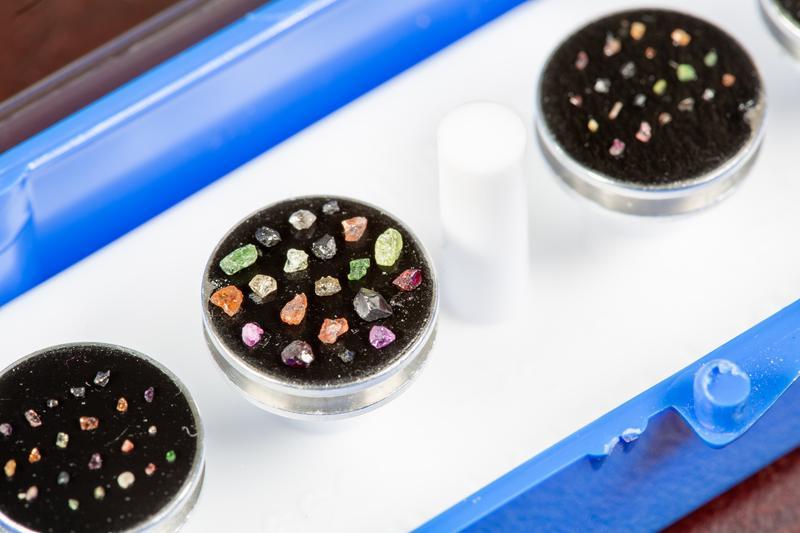
Indicator minerals are naturally occurring grains with specific chemical compositions that are characteristic of particular types of mineral deposits. These minerals can be transported away from their source by processes such as glaciation, erosion and fluvial systems, and may be preserved in sediments far from their origin.
By identifying and analyzing these grains, geologists can trace them back to their source and infer the presence of mineralization, even when it is not exposed at the surface. They have long been central to mineral exploration, particularly in regions where glacial cover or overburden limits direct access to bedrock.
Expanding the Exploration Toolkit with Automated Workflows
For decades, this work has relied on careful visual observation of processed heavy mineral concentrates under a microscope by highly trained specialists. This approach has supported major discoveries, particularly in the diamond sector where it has been widely applied, and has also contributed to discoveries of gold, magmatic sulphide, porphyry and volcanogenic massive sulphide deposits globally.
However, it can be slow, subjective and typically focused on one commodity at a time. In addition, fewer people are now entering the field with this specialized training, adding further pressure to an already time- and labour-intensive approach.
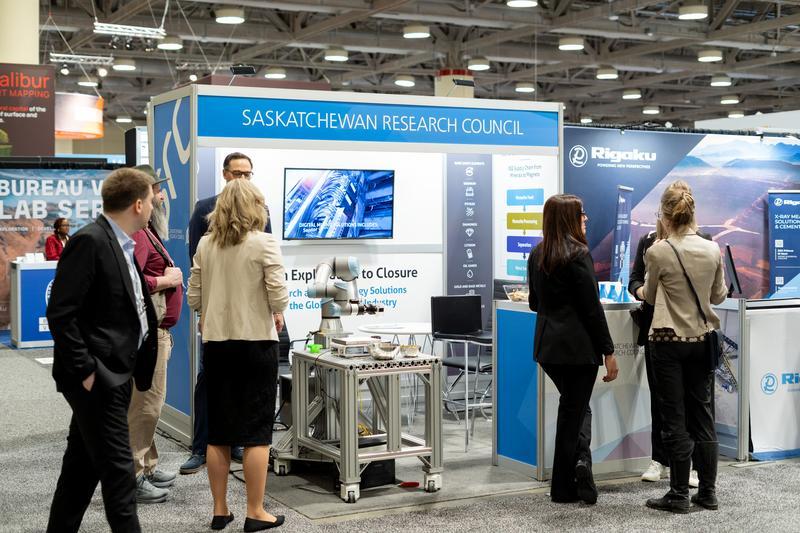
To address these challenges, the Saskatchewan Research Council (SRC) has been developing a high-throughput automated indicator mineral workflow – the sequence of steps used to prepare, analyze and interpret samples – in collaboration with industry. By combining advanced instrumentation, robotics and machine learning-driven analytics, this approach is designed to deliver standardized mineralogical datasets at a scale and level of detail not previously achievable.
Rather than relying on sub-sampling (i.e., analyzing only a small portion of a sample) and selectively identifying a limited suite of known indicator minerals, the workflow is designed to generate complete mineralogical, chemical and spatial datasets within timeframes that support active exploration decision-making.
This shift from selective, experience-driven observation to comprehensive, quantitative analysis provides a more representative understanding of each sample, allowing companies to adapt programs within the same season, optimize drilling strategies and extract more value from every sample collected.
In an industry where time and confidence in decision-making are critical, this represents a fundamental change in workflow.
A Shift from Observation to Data-Driven Mineralogy
The challenge facing the industry is not simply sample throughput (i.e., the number of samples that can be analyzed within timeframes that support exploration decision-making). Traditional laboratory workflows are built around selective observation and interpretation, which limits the scale, consistency and reuse of the resulting data. Automated mineralogy represents a shift away from this model toward comprehensive, quantitative and standardized mineralogical datasets.
The intent is not to replace expertise, but to change how mineralogical information is generated, scaled and applied across exploration programs.
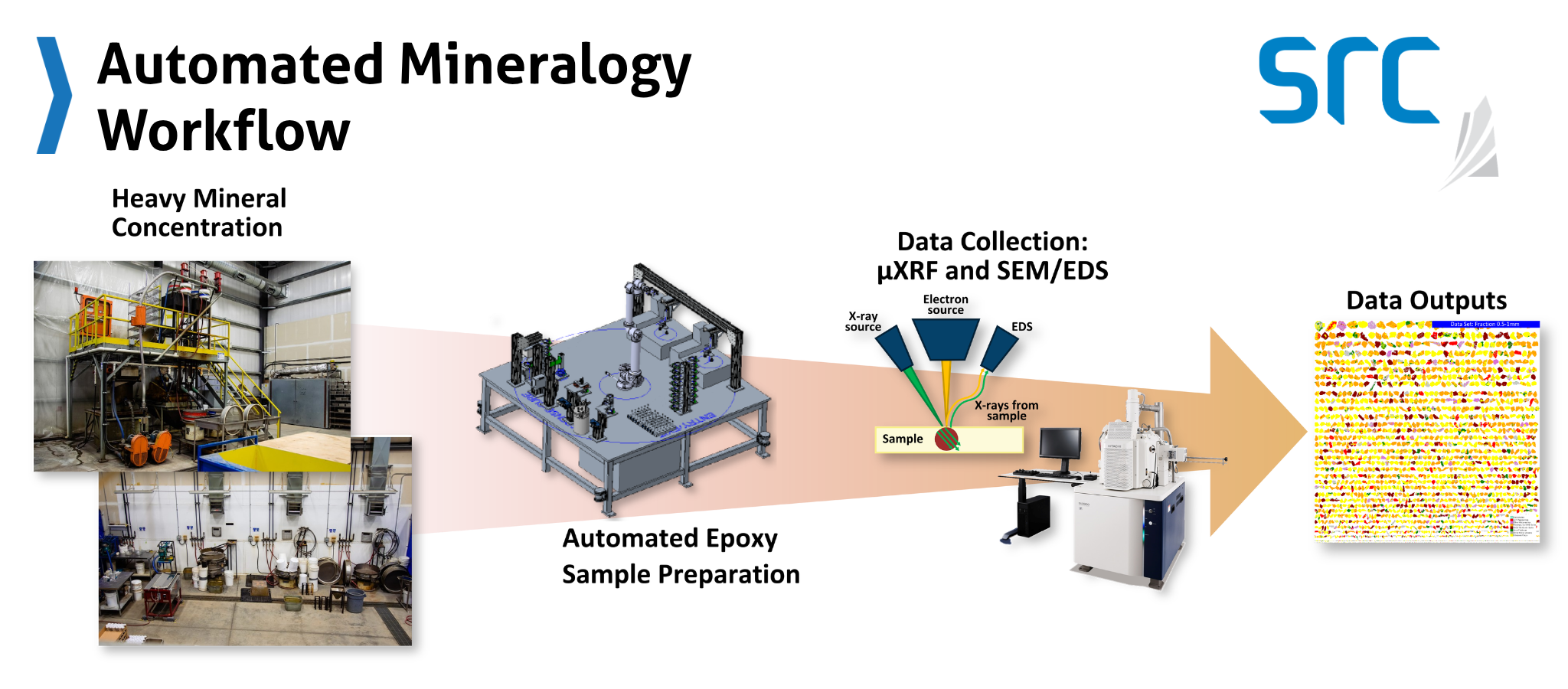
At the centre of this initiative is SRC’s fully integrated workflow, which combines automated sample preparation, advanced instrumentation and data analytics. Rather than relying on sub-sampling or selective grain picking, the system can analyze every grain in a heavy mineral concentrate, providing more quantitative information faster and more accurately than traditional approaches.
From Single-Commodity Results to Multicommodity Insight
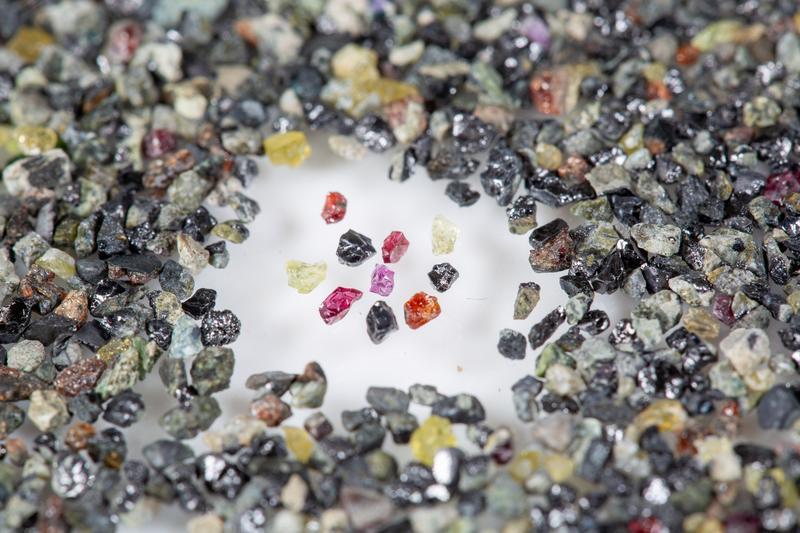
Traditional approaches often focus on identifying one suite of minerals linked to a single target commodity at a time.
One of the most significant implications of SRC’s workflow is the ability to move beyond single-commodity analysis. With every grain being imaged and chemically characterized, the same dataset can support exploration for multiple commodities simultaneously without bias. This allows exploration decisions to be guided by what is present in the sample and by current commodity priorities, while preserving the full dataset for future programs as priorities may change.
The approach also enables the reanalysis of archived heavy mineral concentrates. Many historical samples were originally processed with a single target commodity in mind, such as diamonds; revisiting the same, already concentrated samples using automated mineralogy can reveal new information without the need for additional sampling. This can significantly reduce the time and cost required to revisit regions as exploration priorities evolve.
Inside the Integrated Workflow
The analytical core is a dual-beam instrument that combines micro–X-ray fluorescence (µXRF) and scanning electron microscopy (SEM) with energy-dispersive spectroscopy (EDS). This configuration allows major-to-trace element quantification and high-resolution imaging within the same unit, producing detailed mineralogical data at a throughput that has not been previously achievable.
Supporting this analysis is a fully automated sample preparation circuit developed by SRC with industrial automation experts. Robotic mounting ensures consistent preparation, reducing operator requirements and eliminating common bottlenecks. Together, preparation and analysis are designed to support thousands of pucks per year, with capacity to scale as demand grows.
The resulting datasets are classified using deterministic algorithms and machine-learning tools, rather than relying solely on visual identification by individual observers. This provides quantitative, objective and repeatable mineral identification and generates outputs that extend beyond traditional indicator mineral reports.
Working with Mineralogical Data in a Digital Environment
All results from the automated workflow are delivered through a custom-built platform. Users can interrogate multiple data layers, including visual grain images, grain-shape characteristics, backscattered electron imaging, luminescence and full elemental compositions from both micro-XRF and SEM-EDS. This provides a consistent, fully quantitative dataset that can be used to understand both background and indicator minerals in the sample.
In addition, each grain can be linked to complete geospatial metadata supplied by the client. When combined with ice-flow direction maps, regional geology, fluvial systems, geomorphology and surficial geology, these datasets can be used to identify trends, patterns and anomalies relevant to exploration.
While such interpretations have traditionally relied on expert analysis, they can be time-consuming and difficult to apply consistently across large or multi-layered datasets. The integration of quantitative mineralogical data within a dedicated digital platform allows these relationships to be evaluated more efficiently, with greater consistency and at a larger scale.
Machine-learning tools further support this process by helping to identify subtle patterns and correlations, increasing confidence in interpretation and making it easier to work with complex, multi-layered datasets.
Implications for Exploration Programs
Automating preparation and analysis reduces turnaround times while maintaining consistency and quality. Analyzing all grains in a sample minimizes the risk of missing rare but significant minerals that may be critical to identifying a deposit, supporting more confident target selection and reducing unnecessary drilling.
Reanalyzing previously processed archived samples supports more sustainable exploration practices and can help uncover new opportunities not initially realized. Instead of starting from scratch, companies can build on legacy sample collections, often originally examined for a single commodity, while stretching exploration budgets and gaining broader insight into their areas of interest.
Building on Experience at SRC
SRC brings decades of experience in indicator mineral processing to this initiative. Its Geoanalytical Laboratories Diamond Services has processed thousands of samples annually, refined in-house concentration methods and maintained rigorous quality assurance through ISO 17025:2017 accreditation of its observation processes. This foundation ensures that accuracy and repeatability remain central as these new technologies are integrated.
The entire workflow, from sample receiving through preparation and analysis, is located within purpose-built facilities at SRC to further improve efficiency. Together with close collaboration with industrial technology experts, this integrated approach reflects a deliberate investment by SRC and industry in the next phase of mineral exploration practice.
Looking Ahead: Automated Mineralogy as a Workflow Evolution
Automated mineralogy has been discussed within industry for years, with varying attempts at implementation. What is changing now is the ability to deploy it at scale as part of a fully integrated and commercially viable workflow.
High-throughput automated indicator mineral analysis represents a shift from selective observation toward comprehensive, reusable mineralogical datasets. By combining automation, advanced instrumentation and data analytics, SRC’s approach enables exploration teams to work with greater clarity, adapt strategies earlier and make decisions based on complete datasets rather than partial snapshots.
In a sector where uncertainty is costly, this change in workflow may prove as significant as the technology itself.
