
Key Points:
- National Indigenous Peoples Day is an opportunity to celebrate Indigenous cultures, histories and contributions while reflecting on the ongoing journey toward reconciliation.
- SRC is advancing reconciliation through its Indigenous Action Plan by creating opportunities for Indigenous employees, building cultural awareness and strengthening relationships with Indigenous communities.
- Programs like SRC’s kiskiyihta summer student initiative provide Indigenous students with hands-on experience, mentorship and pathways into research and technology careers.
- Employee-focused training and engagement help support meaningful participation of Indigenous Peoples in Saskatchewan’s economy and workforce.
National Indigenous Peoples Day (NIPD) is an opportunity to celebrate the cultures, histories and contributions of First Nations, Inuit and Métis Peoples across Canada and reflect on the ongoing journey toward reconciliation.
At SRC, we are making that journey through our Indigenous Action Plan which includes creating opportunities for Indigenous employees, building cultural awareness and strengthening relationships with Indigenous Peoples and communities.
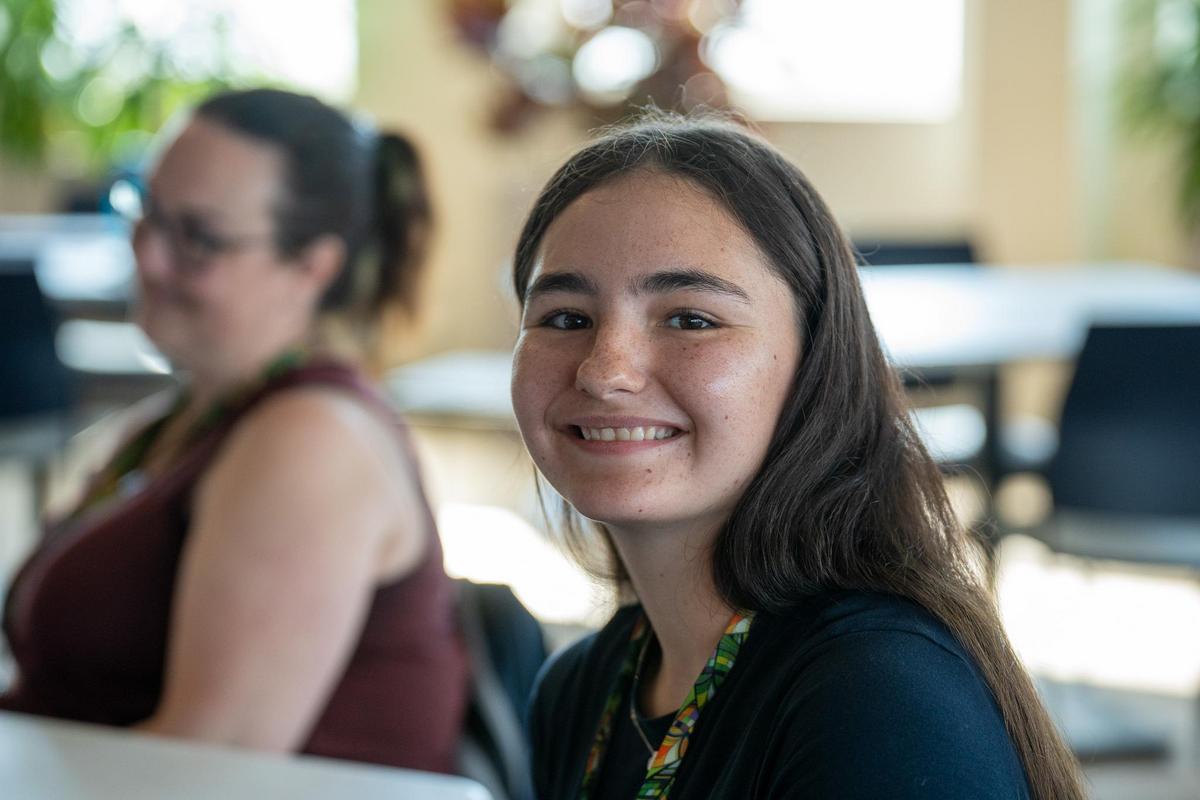
One example of this is SRC’s new summer student program, kiskiyihta, which provides Indigenous students studying at a Saskatchewan post-secondary institution with opportunities for hands-on learning in a research and technology environment. The program includes unique opportunities to gain experience and grow that include one-on-one mentorship/coaching and connection points throughout the experience.
Myles Derfler, a current student in this program who grew up in Saskatoon with family on Yellow Quill First Nation, said corporate participation in NIPD is a step forward in reconciliation.
“It’s about repairing broken relationships and amending the past,” he said.
“I like that there’s my own day to go out and participate in my own cultural activities because it keeps me grounded.”
Renaming June 21 to NIPD and recognizing the month of June as Indigenous History Month can act as a catalyst for Canadians from coast-to-coast to engage with and learn about the history of Canada and its relationship with Indigenous Peoples.
Derfler believes it’s imperative that all Canadians — Indigenous or non-Indigenous — take time on this day to participate in Indigenous cultural ceremonies and celebrations.
“Attend a powwow or educate yourself with books or videos, something that gives you insight into Indigenous history and culture,” Derfler said. “Participate in something that offers you something you can take away and educate others or reflect personally.”
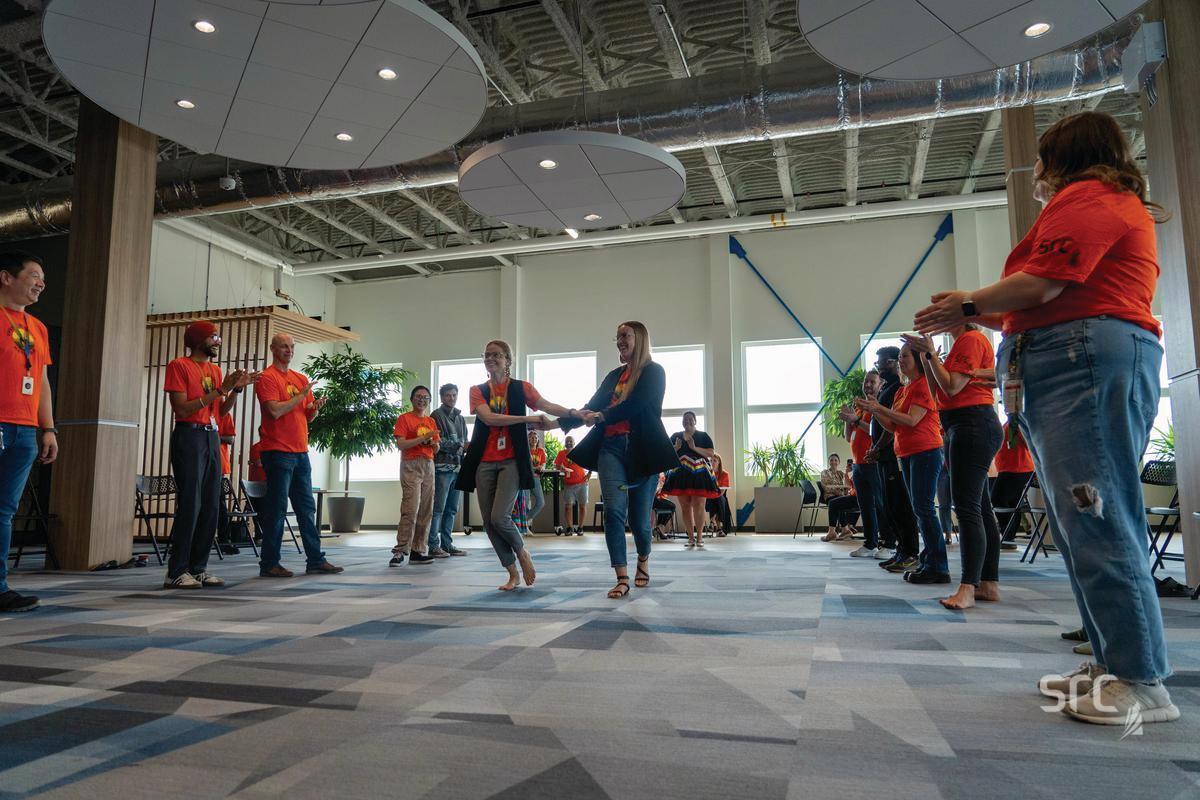
SRC has taken a deliberate approach to celebrating Indigenous history and culture, holding an annual National Indigenous Peoples’ Day celebration for its employees across the Council, as part of its reconciliation efforts.
A Newcomer’s Journey to Reconciliation
Walking alongside Derfler during his summer internship at SRC, Herman Coceancigh, Senior Technical Advisor with SRC Geoanalytical Laboratories, volunteered to be an Indigenous summer student mentor at SRC. Originally from Chile, now working at SRC as a chemist, Coceancigh is intentionally embracing a journey of learning and reconciliation.
“As a newcomer, my intention is to learn about the history of Canada and to be thankful for the land, but now I am learning about the history of Canada and Indigenous Peoples and I’m understanding why it is so important to acknowledge the past in order to move ahead,” Coceancigh said.
Being a mentor for the younger generation has always piqued Coceancigh’s interest, and when the opportunity to mentor an Indigenous summer student at SRC came up, he jumped at the chance.
“I enjoy the dynamics of teacher and student, where you can mentor a student and you can act as a catalyst for future development or education,” Coceancigh said.
On June 21, Coceancigh is looking forward to taking the time to acknowledge the day of recognition through reflecting on the past and thinking about how to include Indigenous Peoples at SRC in the future.
“It’s something I’m very interested in and eager to move forward because I feel SRC will benefit greatly from engaging with Indigenous communities and build a network to have more Indigenous employees and summer students,” he said.
Indigenous Cultural Training at SRC
John Lagimodiere, Métis owner of Aboriginal Consulting Services (ACS), said reconciliation is about acknowledging the truth of Indigenous Peoples’ history: Admitting that something really bad happened, and then committing to doing something about it.
“It’s hard as a Canadian not to have heard about this stuff and now we’re in a time where Canadians are starting to chip away at historical fallacies and breaking down the barriers of racism,” Lagimodiere said.
In 2025, in an effort to build awareness about the history of Canada and Indigenous Peoples across SRC, the council rolled out an Indigenous Cultural Awareness Training program called Our Shared History.
This was SRC’s response to the Truth and Reconciliation Commission’s Call to Action 92, which calls on organizations and businesses to provide education for management and staff on the history of Indigenous Peoples, including the history and legacy of residential schools, the United Nations Declaration on the Rights of Indigenous Peoples, Treaties and Aboriginal rights, Indigenous law and Aboriginal-Crown relations.
Over the first round of training sessions, 96 per cent of SRC staff participated in an effort to fill the gaps in their knowledge of the history of Canada and the resulting impacts that continue to be felt to this day. The training aimed to provide the tools needed for SRC employees to create a culturally safe workplace, attract and retain Indigenous talent and build authentic, meaningful relationships with Indigenous communities.
Delivering this type of training is booming across corporate Canada, according to Lagimodiere, one of the two main training leaders delivering SRC’s program.
“It’s happening more than people think,” he said. “Several of the Calls to Action ask for this type of training because Canadians new and old just don’t know. More and more people want to know and there’s a huge generational gap of Canadians who weren’t taught this.
“Those gaps were filled with myths, misconceptions and stereotypes.”
Through ACS, Lagimodiere is on the front lines shattering stereotypes and filling them in with facts about the history of Indigenous Peoples and the path towards reconciliation that is forming right now.
Equal Opportunities for Indigenous Peoples
During Our Shared History, Lagimodiere used the metaphor of two canoes travelling down a river. One represents non-Indigenous Canadians while the other represented Indigenous Peoples.
In this metaphor, the Indigenous canoe was sinking, as the stress and weight of the Treaty negotiations with the Crown delivered empty promises, and instead, excluded Indigenous Peoples from the economy,
The canoe sank even further with the introduction of Indian Residential Schools, where the Crown attempted to “take the Indian out” of Indigenous children.
Today, the goal is to have the Indigenous canoe back above water and at the same pace as the non-Indigenous canoe.
“Indigenous Peoples should be full participants in the economy of their territories whether it’s in mining, forestry, tourism and agriculture,” Lagimodiere said. “That’s a key piece because jobs change lives, it creates that self-worth and provides economic freedom and an opportunity to break that poverty chain which was the result of this traumatic history and policies.”
Historically, Indigenous Peoples were cut out of the economy especially the natural resource economy, Lagimodiere said, because there were so many restrictions imposed on Indigenous Peoples and racism played a big role.
“So a lot of the focus now should be about including Indigenous Peoples when you talk about economic activity and reconciliation. It must be holistic,” he said.
Lagimodiere said on June 21, Canadians across the country should make it a priority to engage and participate in activities where they are shoulder to shoulder with Indigenous neighbours and really try to take in the cultural celebration and think about how, as an individual, you can make a difference in the wider journey to reconciliation.
“Head to a NIPD event, bring in a guest speaker to share the importance of this day, have conversations in the workplace or at home about what the day means, but the best is to go out and celebrate the culture and the events, and there’s no shortage of events across Saskatchewan,” Lagimodiere said.
